
GAINES RUGER DONOHO
(American, 1857-1916)
SOLD
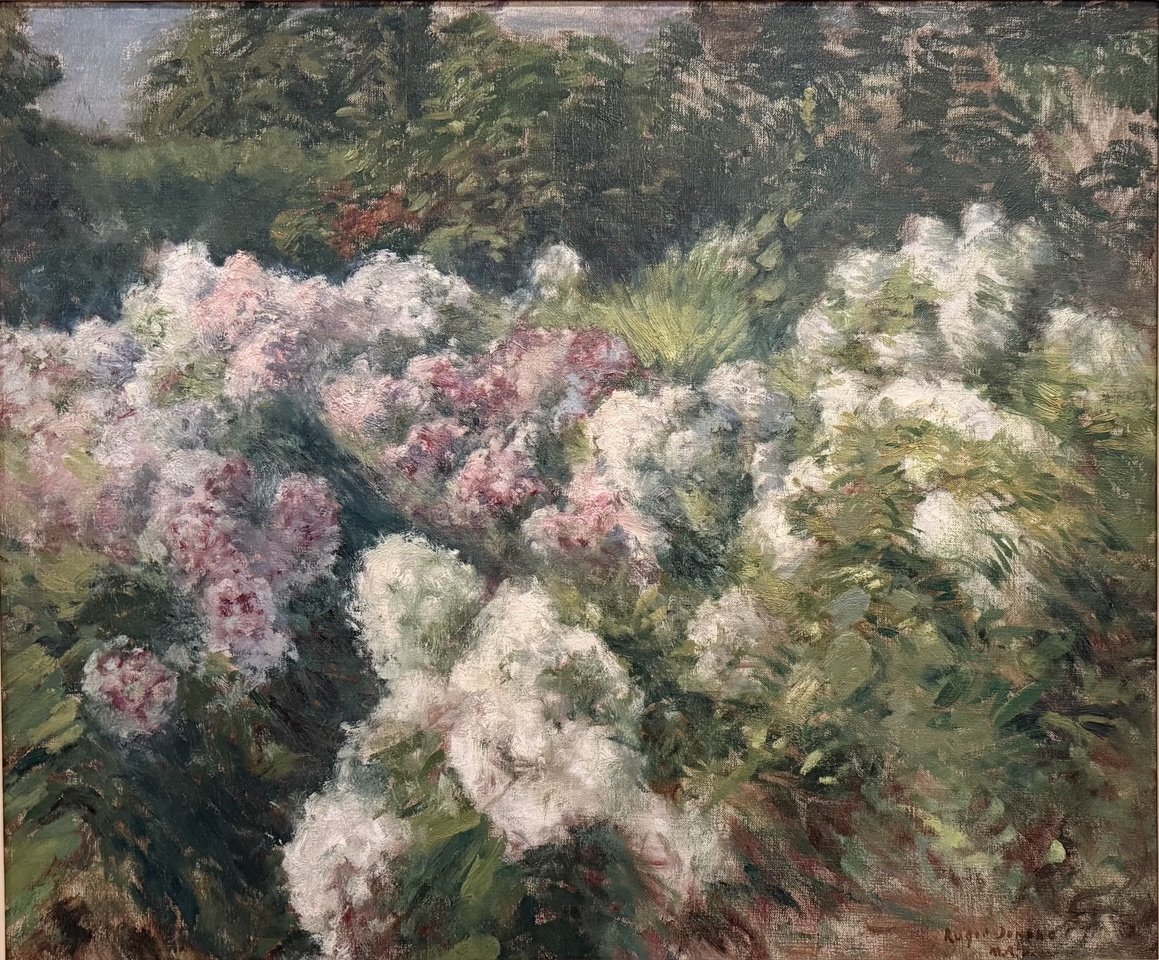
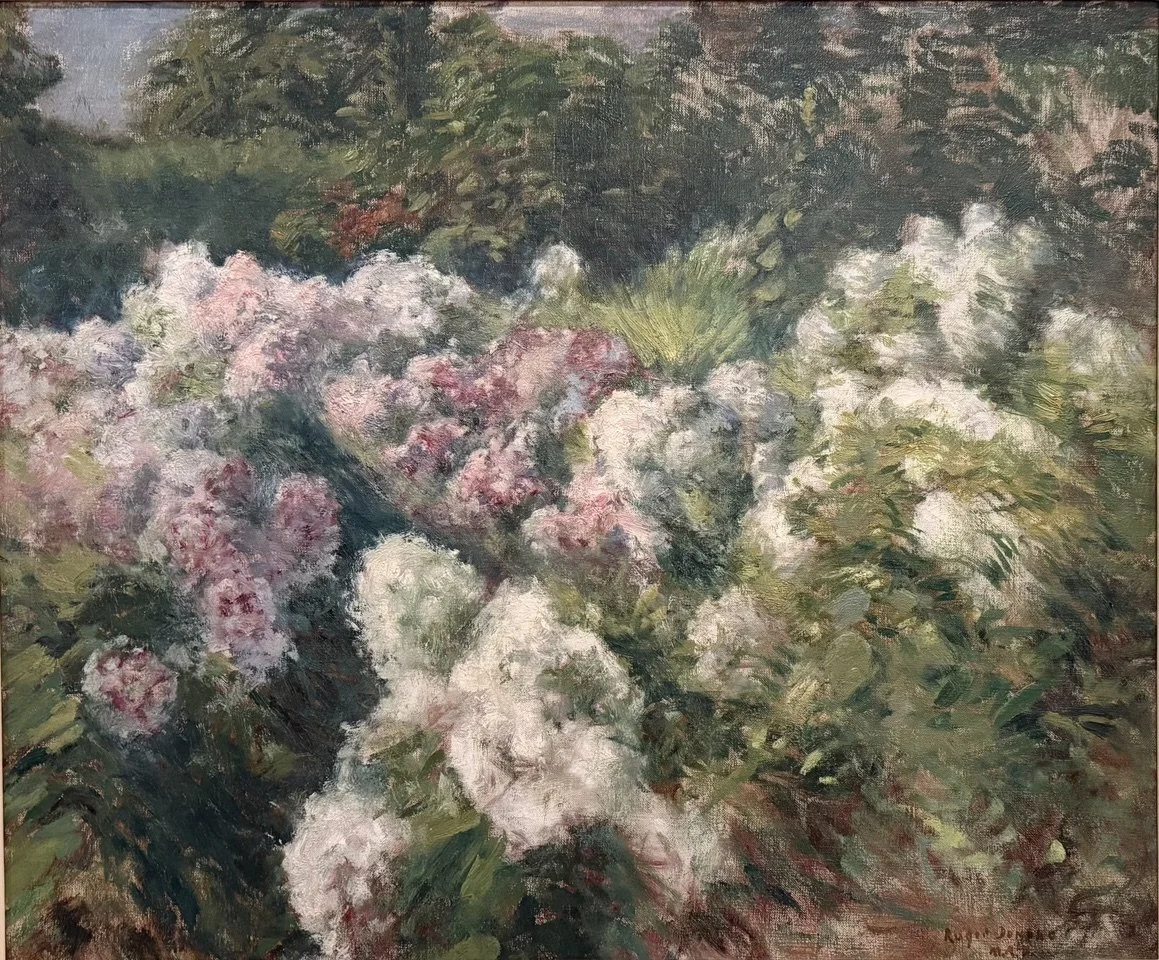
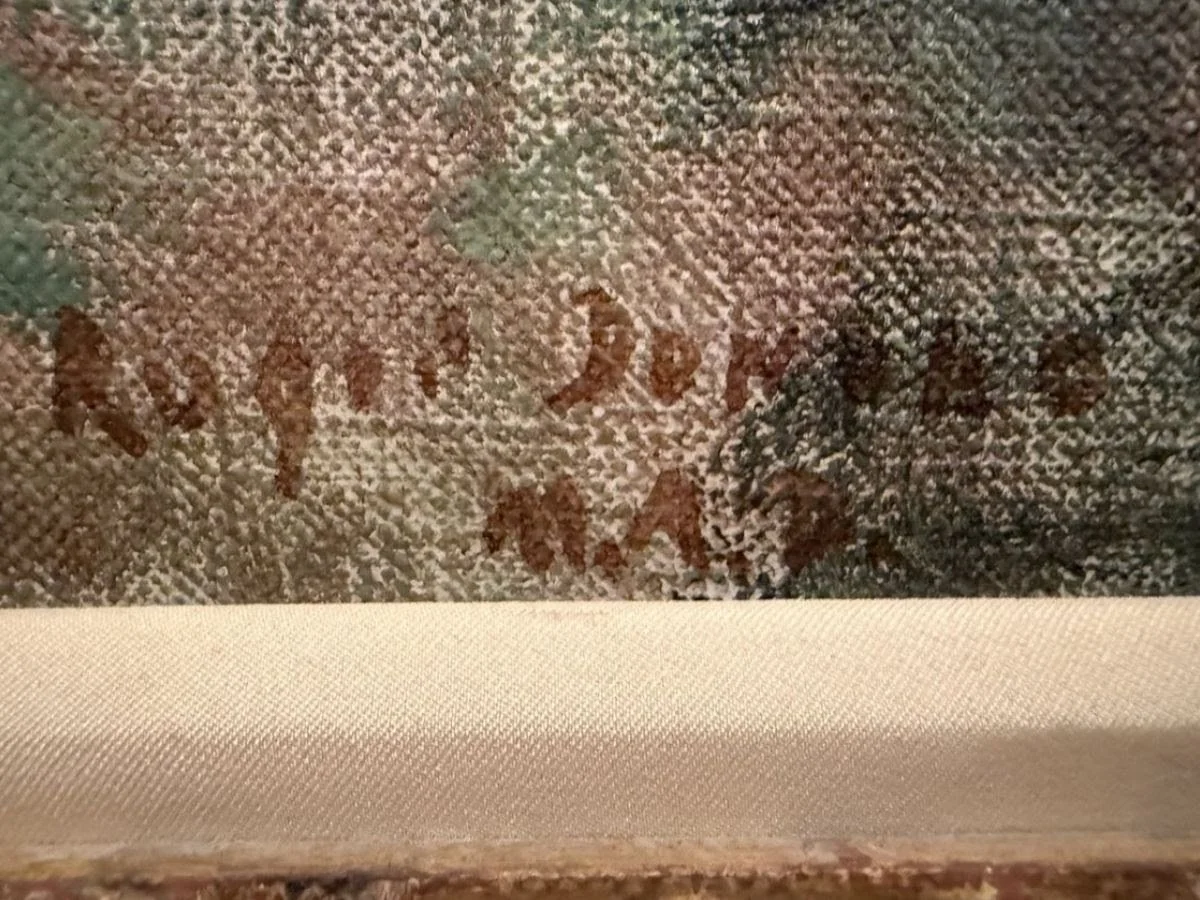
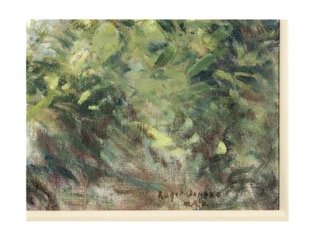
Sketch of Phlox, c. 1915-16, oil on canvas, signed posthumously by the artist's wife "Ruger Donoho/M.A.D." lower right, titled and signed on stretcher en verso, 25 x 30 in.
In a giltwood frame with a linen liner.
Exhibited: Hirschl & Adler Galleries, NY, New York, March 12 - April 2, 1977; "G. Ruger Donoho (1857-1916): A Retrospective Exhibition," Parrish Art Museum, Southhampton, NY, no. 30; "Collector's Choice," Nov. 28, 1982 - Jan. 16, 1983, Mississippi Museum of Art, Jackson, MS, no. 3, with exhibition labels en verso.
Provenance: The estate of the artist, 1916; to Hirschl & Adler Galleries, New York, 1982; Private Collection, MS, 1983 to 2017; Hirschl & Adler Galleries, New York, acquired in 2017.
Gaines Ruger Donoho was born in Church Hill, Mississippi in December 1857, the son of a prosperous plantation owner. The onset of the Civil War, coupled with the death of his father, disrupted Donoho’s childhood in Mississippi. His mother’s relatives arranged for their move at the end of the war and eventually they ended up in Washington, D.C. By 1878, Donoho was studying painting in earnest and left for New York to enroll at the newly formed Art Students League where his teachers were William Merritt Chase and Walter Shirlaw. After only a year, Donoho traveled to France to further his painting studies at the Academie Julian in Paris. He studied under noted French artists William-Adolphe Bouguereau, Rodolphe Boulanger and Jules-Joseph Lefebvre.
Between 1881 and 1886, Donoho’s paintings were regularly exhibited at the Paris Salon and beginning in 1882, he was sending his work back to America for exhibition at the Pennsylvania Academy of Fine Arts and National Academy of Design. In 1885, his painting Bords de Foret won an award at the New Orleans Cotton Centennial Exposition. In 1887, he returned to New York City where he established a studio. He exhibited at the Society of American Artists, the National Academy, and in 1889, was awarded a silver medal at the Paris International Exposition.
In 1891, he was among the first group of artists to settle permanently in East Hampton on Long Island. Donoho acquired an expansive piece of land where he built a home that he shared with his wife, Maria Ackley, an avid gardener from Philadelphia whom he married in 1894. They took great delight in the pastoral, idyllic life of East Hampton and welcomed artists such as Childe Hassam and Shirlaw for visits. Donoho dropped out of the mainstream of American art, stopped exhibiting and painted strictly for personal pleasure. By the late 1890s, as his friendship with Hassam deepened, Donoho began painting in an Impressionist style, using a light palette and soft brushwork with his opulent flower garden as the subject matter, depicting the hollyhocks, phlox, irises and other perennials that he and his wife cultivated on their beautiful estate.
In Sketch of Phlox, the majority of the composition is dominated by a lush profusion of purple and white phlox, a plant known for its star-shaped flowers. Intent on capturing the effects of dappled sunlight, Donoho uses small, stitch-like brushstrokes which creates lively decorative patterning and rich surface textures on the canvas. According to the annotation made on the stretcher by the artist’s wife, Sketch of Phlox was the “last sketch” he made prior to his death on June 18, 1916. This painting was in the artist’s collection when he passed away and was signed posthumously by his widow, Matilda Ackley Donoho, who appended her initials “M.A.D.” to the added signature in the lower right corner. This was common practice for the estate. When Hirschl & Adler Galleries of New York represented the Donoho Estate in the late 1970s, 28 of the 54 paintings in the estate collection, over half, were signed in this manner.
Donoho’s work is included in the permanent collections of the Metropolitan Museum of Art; Mississippi Museum of Art; High Museum of Art, Atlanta GA; New Orleans Museum of Art; Smithsonian American Art Museum; Morris Museum of Art, Augusta, GA; Johnson Collection, Spartanburg, SC; Lauren Rogers Museum of Art, Laurel, MS; Greenville County Museum of Art, Greenville, SC, among others.
His oil paintings rarely become available. A Donoho canvas of this caliber presents a unique opportunity for the discerning collector.
Reference:
Pisano Ronald, G. Ruger Donoho (1857-1916): A Retrospective Exhibition, Hirschl & Adler Galleries, New York, March 12-April 2, 1977.
Barilleaux, Rene Paul and Victoria J. Beck, G. Ruger Donoho, A Painter’s Path, Jackson: Mississippi Museum of Art, 1995.
Quisque iaculis facilisis lacinia. Mauris euismod pellentesque tellus sit amet mollis.